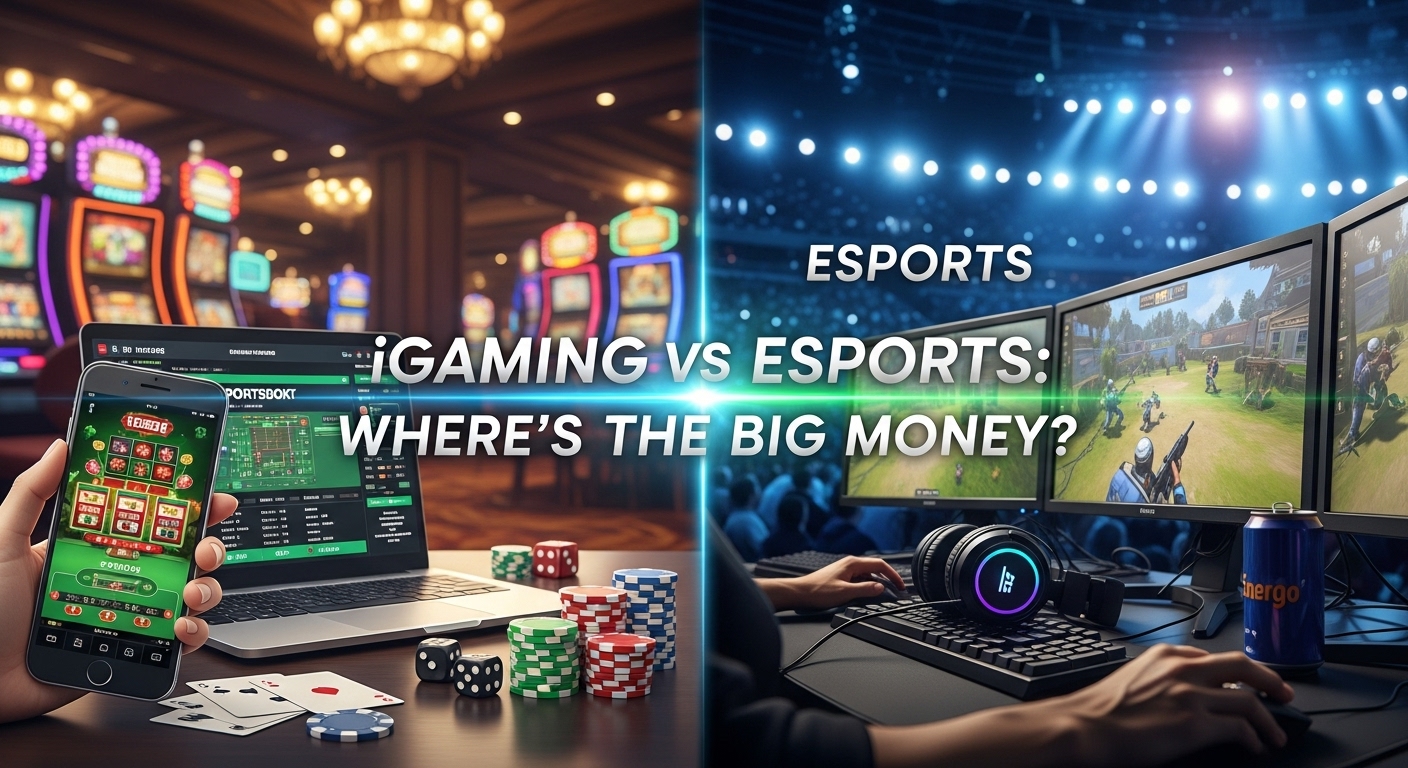
In the world of digital entertainment, two industries have consistently captured headlines for their explosive growth: iGaming and esports. Both sectors are fueled by technology, massive online communities, and a constant demand for competitive excitement. While they share similarities, their business models and revenue streams are quite different, and this has sparked an ongoing debate—where’s the bigger financial opportunity?
This article takes a close look at iGaming and esports, breaking down their growth patterns, monetization strategies, and long-term outlooks to understand which one is better positioned to capture the “big money.”
Understanding iGaming
iGaming refers to online gambling activities, including casino games, sports betting, poker, and lottery platforms. It is a highly regulated industry, with rules varying across different regions. Over the past decade, iGaming has experienced exponential growth as more countries legalize online betting and as mobile technology makes gambling more accessible than ever.
According to industry reports, the global iGaming market is expected to surpass $150 billion within the next few years. Sports betting is the primary driver, particularly in regions like North America, Europe, and Asia. The legalization of online sports betting in the United States, for example, has opened up a multi-billion-dollar revenue stream almost overnight.
The appeal of iGaming lies in its immediacy and accessibility. Players can log in from anywhere, place wagers on live sporting events, or spin digital slot machines in seconds. This constant availability creates a steady flow of revenue for operators, which is one of the reasons investors view the industry so favorably.
Understanding Esports
Esports, on the other hand, is the competitive side of video gaming. Professional players and teams compete in games like League of Legends, Counter-Strike, Dota 2, and Fortnite, often in front of millions of online viewers. Esports is not gambling in itself, but it has grown into a thriving ecosystem supported by sponsorships, advertising, media rights, streaming platforms, and merchandise.
The esports industry has a much younger audience compared to iGaming. Fans are typically between 18 and 34 years old, highly engaged, and digitally native. This makes esports an attractive platform for brands looking to connect with hard-to-reach demographics.
Revenue in esports has steadily grown, reaching nearly $2 billion annually. While this figure pales in comparison to iGaming’s multi-billion-dollar market, the growth trajectory is compelling. Streaming platforms like Twitch and YouTube Gaming have amplified exposure, while large-scale tournaments now rival traditional sports events in terms of viewership. The 2018 League of Legends World Championship, for instance, recorded over 200 million concurrent viewers globally, a figure that competes with the Super Bowl.
Revenue Streams: How the Money Flows
iGaming Revenue Model
iGaming operators make money primarily through player wagers. Whether it’s a poker hand, roulette spin, or sports bet, the platform always has a mathematical edge. This “house advantage” ensures profitability over time. Other revenue sources include in-game purchases for online casino apps and partnership deals with sports leagues or media platforms.
Key revenue drivers in iGaming include:
- Sports Betting: Bets placed on real-world sporting events.
- Online Casinos: Digital versions of slots, blackjack, roulette, and more.
- Poker Rooms: Competitive online poker with buy-ins and tournament prizes.
- Lotteries and Bingo: Virtual recreations of traditional lottery games.
The recurring nature of betting means that once users are acquired, they generate steady revenue for operators.
Esports Revenue Model
Esports monetization is more complex. Since fans are not paying to watch tournaments directly in most cases, revenue largely comes from external sources.
Key revenue drivers in esports include:
- Sponsorships: Companies pay to have their logos on team jerseys, events, or streams.
- Advertising: Brands run ads on live streams or tournament broadcasts.
- Media Rights: Broadcasters and platforms pay to secure exclusive rights to tournaments.
- Merchandise and Ticket Sales: Jerseys, branded gear, and live event tickets.
- In-Game Purchases: Developers monetize esports titles through cosmetic items, skins, and battle passes.
While esports does not enjoy the same steady revenue model as iGaming, it benefits from brand partnerships and a highly engaged fan base.
Where the Big Money Is Today
If we’re talking strictly in terms of revenue size, iGaming is the clear winner. The global iGaming market dwarfs esports, and its predictable, recurring revenue model makes it particularly attractive to investors. The legalization trend in markets like the U.S., Canada, and parts of Asia means that iGaming’s ceiling is still rising.
Esports, however, is not to be underestimated. Though smaller in dollar terms, it has cultural momentum that iGaming lacks. Esports sits at the intersection of gaming, streaming, and digital culture—a combination that has made it mainstream entertainment for younger audiences. Unlike iGaming, which is heavily regulated and sometimes stigmatized, esports enjoys broader social acceptance and is increasingly covered by traditional sports media.
The Long-Term Outlook
iGaming’s Future
The future of iGaming depends largely on regulation. As more governments recognize the tax potential of legal betting, iGaming is poised for continued growth. The integration of emerging technologies like virtual reality casinos and blockchain-based betting platforms could also reshape the industry. However, regulation also poses challenges, as strict compliance requirements can limit expansion and increase operational costs.
Esports’ Future
Esports has a different trajectory. It is less dependent on regulation and more reliant on cultural adoption and media infrastructure. The industry’s biggest challenge lies in profitability—despite huge audiences, many teams and organizations struggle to turn a consistent profit due to high costs and uneven revenue distribution. Still, as more mainstream brands enter the space and media rights deals become more lucrative, the financial sustainability of esports will likely improve.
Comparing Risks and Rewards
For investors, iGaming presents a more mature and stable opportunity. The business model is proven, cash flow is predictable, and growth is tied to regulatory expansion. The risks revolve around legal restrictions, ethical concerns around gambling addiction, and potential market saturation.
Esports, by contrast, is more speculative. While audience numbers are skyrocketing, the industry has not yet figured out how to fully capitalize financially on its popularity. The upside, however, is significant. As esports continues to professionalize and diversify its revenue streams, it could evolve into a financial powerhouse comparable to traditional sports.
Conclusion: Two Different Beasts
When it comes to “where the big money is,” the answer depends on the timeline you’re considering. Today, iGaming is the dominant financial player, with billions flowing through online casinos and sports betting platforms. Its steady revenue model and rapid legalization wave make it an attractive investment.
Esports, on the other hand, represents the future. Its cultural influence, youthful audience, and integration with the broader gaming industry give it unmatched growth potential. While the dollars may not rival iGaming just yet, esports has the kind of mainstream momentum that could eventually rival or even surpass traditional sports.
In short, iGaming is where the big money is today, while esports is where the big money could be tomorrow. Both industries, though different in their approaches, highlight the massive financial opportunities that digital entertainment continues to create.