
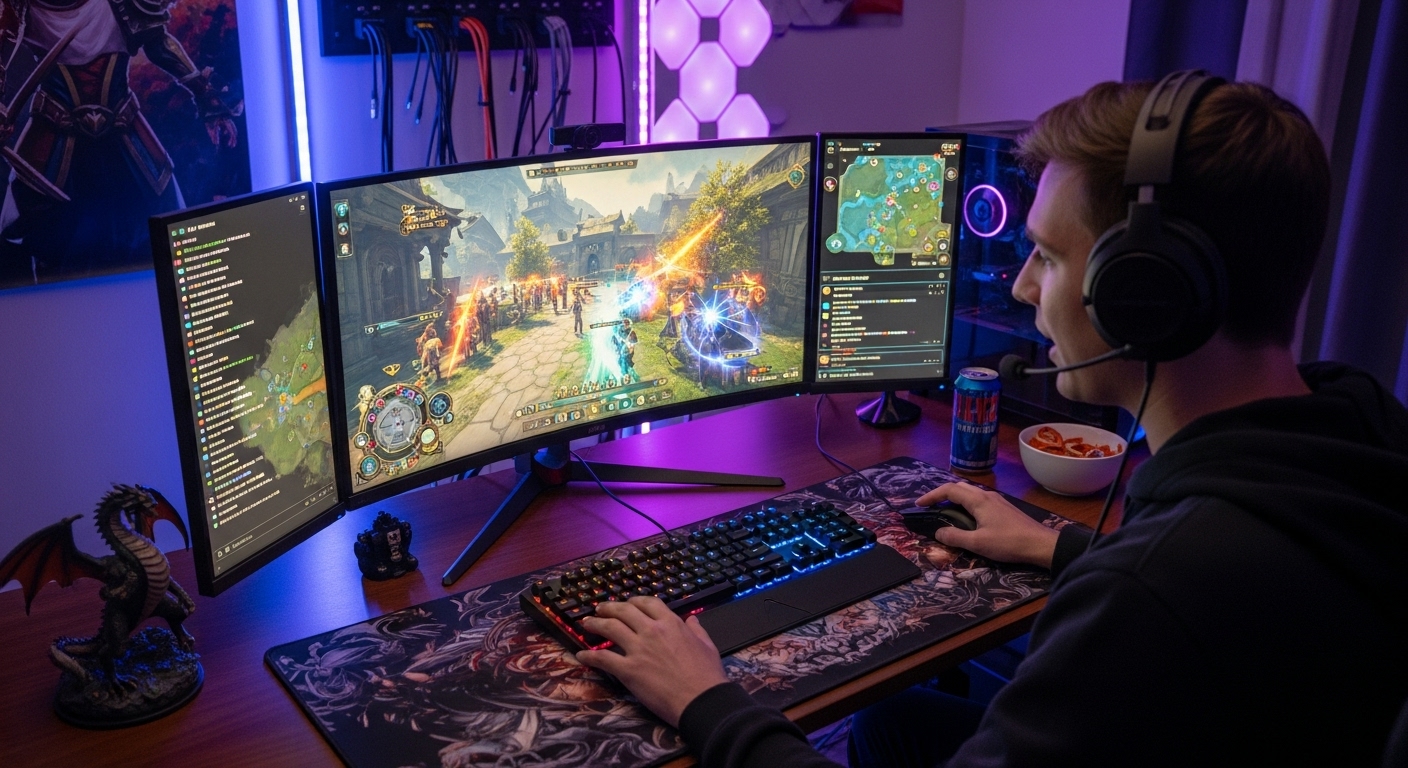
Gaming has grown from a niche pastime into one of the most influential entertainment industries on the planet. What began as simple pixelated adventures in the arcades has now become a multibillion-dollar industry that spans immersive worlds, cinematic storytelling, and competitive esports. The evolution of gaming reflects both technological progress and the changing tastes of players, who continue to push the boundaries of creativity, interaction, and imagination. This blog explores the rich history, technological advancements, genres, cultural influence, and future of gaming in over 2000 words.
The Origins of Gaming
The journey of gaming began in the mid-20th century when scientists and engineers experimented with computer-based games. One of the earliest known games, “Tennis for Two,” was created in 1958, followed by “Spacewar!” in the early 1960s. These early experiments laid the groundwork for what would become a cultural phenomenon.
The 1970s saw the birth of the arcade era. Games like “Pong,” “Space Invaders,” and “Pac-Man” captivated players around the world. For the first time, people gathered in arcades, inserting coins into machines to experience the thrill of competition and high scores. These games were simple by today’s standards, but their addictive gameplay and creative design inspired generations of developers.
Home gaming soon followed, with consoles like the Atari 2600 bringing the arcade experience into living rooms. This shift marked the beginning of gaming as a mainstream hobby, one that would continue to evolve and expand for decades.
The Rise of Consoles and Home Gaming
The 1980s and 1990s were transformative decades for gaming. Companies like Nintendo, Sega, and Sony revolutionized the industry with consoles that offered increasingly complex graphics, sound, and gameplay. The Nintendo Entertainment System (NES) introduced iconic franchises such as “Super Mario Bros.,” “The Legend of Zelda,” and “Metroid.” These games not only entertained but also set new standards for storytelling and design.
The competition between Nintendo and Sega defined the 1990s, with titles like “Sonic the Hedgehog” challenging Mario’s dominance. Meanwhile, Sony entered the market with the PlayStation, which utilized CD-ROMs instead of cartridges, allowing for larger games with full-motion video and high-quality audio. This era also saw the birth of the 3D gaming revolution, with games like “Super Mario 64” and “The Legend of Zelda: Ocarina of Time” setting benchmarks that still influence design today.
Gaming had become more than just a pastime; it was an art form, a storytelling medium, and a global business.
The PC Gaming Revolution
While consoles dominated living rooms, personal computers were quietly building their own legacy in gaming. The flexibility of PCs allowed developers to experiment with new genres, from strategy and simulation to role-playing and first-person shooters. Games like “Doom,” “Warcraft,” and “The Sims” defined PC gaming and introduced experiences that were often more complex and customizable than their console counterparts.
Online multiplayer games began to take shape in the 1990s and early 2000s, as internet connectivity became more common. Titles like “Counter-Strike,” “StarCraft,” and “World of Warcraft” brought players together in vast virtual worlds, fostering communities that transcended geography. The modding community also flourished, allowing players to modify and expand existing games, further fueling creativity and innovation.
The Age of Online Gaming and Esports
As broadband internet became widespread, gaming underwent another major transformation: online multiplayer became the norm. Players no longer had to gather in the same room to play together; they could compete or cooperate with others across the globe.
Games like “Call of Duty,” “League of Legends,” and “Fortnite” redefined the competitive gaming landscape. These titles introduced new forms of play, such as large-scale battle royales and team-based competitions. The rise of esports turned gaming into a spectator sport, with professional players, teams, and tournaments attracting millions of viewers worldwide.
Esports has become a billion-dollar industry, with major tournaments offering prize pools that rival traditional sports. Games such as “Dota 2,” “Valorant,” and “Overwatch” have professional leagues, sponsorships, and massive fan bases. Streaming platforms allow players to share their gameplay with audiences in real-time, creating new careers and communities around gaming.
The Art of Storytelling in Games
Modern games have evolved far beyond simple mechanics and high scores. They are now powerful storytelling mediums capable of delivering emotional, cinematic experiences. Games like “The Last of Us,” “Red Dead Redemption 2,” and “God of War” are celebrated for their complex narratives, lifelike characters, and moral depth.
Interactive storytelling allows players to shape outcomes through their choices, creating a personal connection with the game’s world and characters. Role-playing games and open-world adventures have become especially popular for this reason. Titles such as “Mass Effect,” “The Witcher 3,” and “Elden Ring” give players the freedom to explore vast worlds and decide how their stories unfold.
Gaming’s narrative evolution mirrors that of film and literature, but with one key difference: interactivity. The player is not a passive observer but an active participant, blurring the line between creator and audience.
Technological Advancements and Graphics Evolution
The visual evolution of gaming has been nothing short of extraordinary. From 8-bit pixel art to photorealistic environments, advancements in graphics technology have made games increasingly immersive. Modern consoles and PCs can render lifelike characters, dynamic weather systems, and detailed open worlds that rival cinematic experiences.
Technologies like ray tracing simulate realistic lighting and reflections, while powerful game engines such as Unreal Engine and Unity make it easier for developers to create visually stunning experiences. Virtual reality (VR) and augmented reality (AR) have pushed immersion even further, allowing players to step inside the game world and interact with it physically.
As graphics have advanced, so too have animation, physics, and sound design. Motion capture and AI-driven behaviors create lifelike movement and realistic environments. Every improvement brings players closer to a fully immersive digital experience.
Mobile Gaming and Accessibility
The rise of smartphones has made gaming more accessible than ever before. What was once confined to consoles and PCs is now available to anyone with a mobile device. Games like “Clash of Clans,” “Candy Crush,” and “PUBG Mobile” have reached billions of players worldwide, proving that gaming can be both casual and global.
Mobile gaming has also democratized the industry. With app stores serving as platforms for independent developers, creativity has flourished. Small teams and individuals can now reach massive audiences without the need for major publishers. The mobile market has become a proving ground for new ideas and gameplay mechanics.
Cloud gaming further expands accessibility by allowing players to stream games without needing expensive hardware. Services that host games on remote servers let users play high-quality titles on almost any device with an internet connection, making gaming more inclusive and convenient.
The Role of Artificial Intelligence in Gaming
Artificial intelligence has had a profound impact on gaming. AI is used not only to control non-player characters but also to adapt gameplay based on player behavior. Enemies learn tactics, companions respond intelligently, and worlds react dynamically to choices.
AI-driven systems also power procedural generation, creating vast, unique environments automatically. Games like “No Man’s Sky” use these algorithms to generate entire universes filled with diverse planets and life forms. Machine learning is now being applied to improve graphics, test game balance, and even assist in game design.
As AI technology continues to advance, future games may offer even more personalized and reactive experiences, where every decision truly matters.
Gaming Communities and Social Connection
Gaming is no longer a solitary activity. Online communities have become integral to the gaming experience, providing spaces for collaboration, competition, and friendship. Multiplayer titles encourage teamwork, while forums and social media allow fans to share strategies, fan art, and stories.
Streaming platforms have turned gaming into a social phenomenon. Millions of players watch streamers showcase their skills, humor, and personalities. This form of entertainment has blurred the line between gaming and performance art, giving rise to a new generation of digital celebrities.
Communities also play a vital role in game development. Player feedback, modding, and fan engagement influence how games evolve. Developers now see players as collaborators in the creative process, leading to more responsive and dynamic content.
Cultural Impact of Gaming
Gaming has become a defining part of modern culture. It influences fashion, music, film, and even language. Popular characters and franchises such as Mario, Lara Croft, and Master Chief are cultural icons recognized worldwide. Esports athletes and content creators enjoy fame comparable to that of traditional entertainers.
Games also serve as platforms for artistic expression and social commentary. Titles like “Life is Strange” and “Detroit: Become Human” tackle complex issues such as identity, morality, and human rights. They encourage players to reflect on real-world problems through interactive storytelling.
Moreover, gaming has fostered inclusivity and representation. Developers are increasingly creating diverse characters and narratives that reflect a broader range of experiences and perspectives, making gaming a medium that truly represents global society.
Challenges in the Gaming Industry
Despite its success, the gaming industry faces significant challenges. Issues such as crunch culture, data privacy, and microtransactions have sparked debates about ethics and player rights. The industry’s rapid growth sometimes comes at the expense of workers’ well-being and creativity.
Online toxicity and harassment remain concerns in competitive gaming spaces. Developers and communities are working to create safer, more inclusive environments where all players can enjoy themselves.
Additionally, as gaming becomes more dependent on online services, the preservation of digital content has become a pressing issue. Games that rely on servers can disappear when support ends, highlighting the importance of preserving gaming’s cultural history.
The Future of Gaming
The future of gaming is filled with exciting possibilities. Virtual reality, augmented reality, and mixed reality will continue to evolve, offering even more immersive and interactive experiences. Artificial intelligence and procedural generation will make worlds smarter and more dynamic.
Blockchain technology and digital ownership models may change how players acquire and trade in-game assets. Cloud gaming will continue to expand access, breaking down barriers between platforms and devices. Cross-play and shared ecosystems will ensure that players can connect regardless of hardware.
Gaming’s potential for education and training is also immense. Simulations and serious games are already used in fields like medicine, engineering, and military training. The same mechanics that make games engaging can be used to teach, inspire, and empower people around the world.
Conclusion: Gaming as the Ultimate Art Form
Gaming is no longer just a form of entertainment—it is an art form, a sport, and a global cultural movement. It combines storytelling, technology, music, art, and interactivity in ways no other medium can match. From the earliest pixelated adventures to today’s lifelike simulations and virtual worlds, gaming continues to evolve and inspire.
The future will bring even more innovation, but one thing remains constant: the passion of players and creators. Gaming connects people across borders, languages, and generations, reminding us that play is a universal human experience. As technology advances, the possibilities for creativity and connection in gaming are limitless, ensuring that this dynamic medium will continue to shape the future of entertainment and culture for generations to come.